
Interview for “In the Footsteps of Alexander Nevsky” with Sergey Krechetov

Updated: Oct 22

Synopsis: The documentary is in Sign Language with subtitles in English language and voiced by deaf
and hard of hearing people. Our film is not about deaf people. Our film is for all.
Two people speak Sign Language in a rural library. Kolya, who is hard of hearing, and Tanya,
who is deaf. They are professional guides and invite viewers on a unique journey. The camera
pulls back and the audience sees the entire film crew. The journey begins...
The film crew does not hide behind the scenes. The group finishes filming the scene, gets on a
bus or a plane and goes to the next filming location in Italy, in Russia, in Mongolia.
This documentary in Russian Sign Language looks at the Russian Prince Alexander
Yaroslavich Nevsky (1220 - 1263), famous for his campaigns, travels through the Mongol
Empire and correspondence with the Pope. Tracing the hagiographic story of Alexander’s life,
the film attempts to recreate an amazing picture of the world between East Asia and the
Mediterranean in the time of Alexander. It also focuses on Giovanni da Pian del Carpini, a
Franciscan monk, missionary and the first European traveler to Mongolia.
The film features a selection of unique items, such as a paiza of Uzbek Khan of the Golden
Horde (mid-14th c.), the sword of Prince Daumantas of Pskov (late 13th c.), the manuscript of
The Vita of St Alexander Nevsky (late 13th c.), on display in Russian museums; two letters
from Pope Innocent IV to Prince Alexander (1248), a letter from Great Khan Guyuk to Pope
Innocent IV (1246) at the Apostolic Archive of the Vatican and and an old copy of Carpini’s
History of the Mongols (14th c.) from Biblioteca e Centro di Documentazione Francescana in
Assisi.
Watch the trailer
_________________________________________________________________________________________
Sergey Krechetov
Producer of "In the Footsteps of Alexander Nevsky"

In order to understand the value of your piece, we would like to know more about the mind behind the process. How would you define your personal experience with cinema as a producer? Could you tell us an experience or moment that changed or challenged you?
Perhaps every stage of making In the Footsteps of Alexander Nevsky became a genuine challenge for me. Dozens of documentaries and feature films about Alexander Nevsky have been made, so we had to find an original creative approach. We wanted to develop a new cinematic language and tell the story of our protagonist in a way that audiences had not experienced before.
Above all, we wanted to make an inclusive film not about deaf people, but for everyone.
My background was not originally in cinema. I see myself first and foremost as an entrepreneur. I came to filmmaking through educational and cultural projects, and I approached my first major documentary with the mindset of someone determined to bring an ambitious idea to life. As the film's general producer and co-writer, I was involved not only in organizing the production but also in shaping its concept and narrative.
When we began working on a feature-length film in Sign Language, there was no established model we could simply follow. We had to find our own solutions, both creatively and practically. Working with our director and co-writer, Anna Turchaninova, taught me to approach an idea from a cinematic perspective rather than seeing it solely as a historical or educational project.
There was also a profound sense of happiness in realizing that cinema could bring together several parts of my life that had previously seemed separate: historical research, storytelling, cultural exploration, and accessibility. Making this film meant that I did not have to choose between these interests. Instead, they could reinforce one another and become part of a single creative vision. For me, this was one of the most rewarding discoveries of the entire experience: an ambitious project can become a meeting point for professional skills, personal interests, and ideas that might otherwise never have come together.

Your documentary has a solid and ingenious story and a very distinct shooting identity. How did the idea come about?
The idea grew out of two interests that had accompanied me for many years: history and the search for new ways to make cultural knowledge accessible.
Alexander Nevsky was an especially compelling subject because his life connected worlds that are often studied separately. In the thirteenth century, the political, religious, and cultural landscapes of Eastern Europe, the Mongol Empire, and Western Europe were linked through diplomacy, travel, conflict, and communication. We wanted to explore this wider world rather than present Alexander solely as a national historical figure.
Our research drew on historical chronicles, biographical accounts, and documentary evidence, including remarkable objects and manuscripts preserved in museums and archives. The correspondence involving Alexander Nevsky and Pope Innocent IV, as well as the journeys of the Franciscan missionary Giovanni da Pian del Carpini, helped us explore the connections between the Russian principalities, Rome, and the Mongol world.
We also wanted to bring Alexander's contemporaries into the story. The audience encounters figures such as Emperor Frederick II of the Hohenstaufen dynasty and Saint Francis of Assisi. I believe this broadens the narrative and gives it a richer historical palette. Rather than looking at Alexander's life in isolation, we can see it against the background of a much wider world, shaped by different political ambitions, spiritual traditions, and cultural encounters.
But we did not want to make a conventional documentary in which experts explain history while the audience watches illustrative footage. We imagined a journey in which viewers would discover the evidence alongside the people making the film.
That idea shaped our distinctive visual approach. Our deaf presenters guide the audience in Sign Language. The camera sometimes reveals the filmmaking process itself, allowing viewers to see the crew and understand that historical knowledge is being actively investigated rather than simply delivered by an invisible authority.
This approach also reflects the film's inclusive philosophy. Russian Sign Language is not an addition to a finished film; it is the language in which the film was conceived and created. Voice performances by hard-of-hearing people and subtitles make the story accessible to a wider audience. Ultimately, we wanted to bring historical inquiry and the experience of travel together. The result is a documentary in which the journey through geography is also a journey through evidence, interpretation, and the way we understand the past.

Could you tell us about any difficulties you encountered during filming? Tell us about the choice of locations, as well as the challenges this entailed.
You could say that we filmed across five countries and territories: Russia, Mongolia, Italy, the Vatican, and the territory of the Sovereign Military Order of Malta. Our locations followed a historical story that stretched across an enormous part of the thirteenth-century world. Our expeditions took us to fourteen cities, and we spent thirty days filming on location.
Each destination had to justify its place in the narrative. We were not looking simply for beautiful landscapes or impressive architecture. We wanted to find places that could reveal something meaningful about the people, institutions, and historical connections we were investigating.
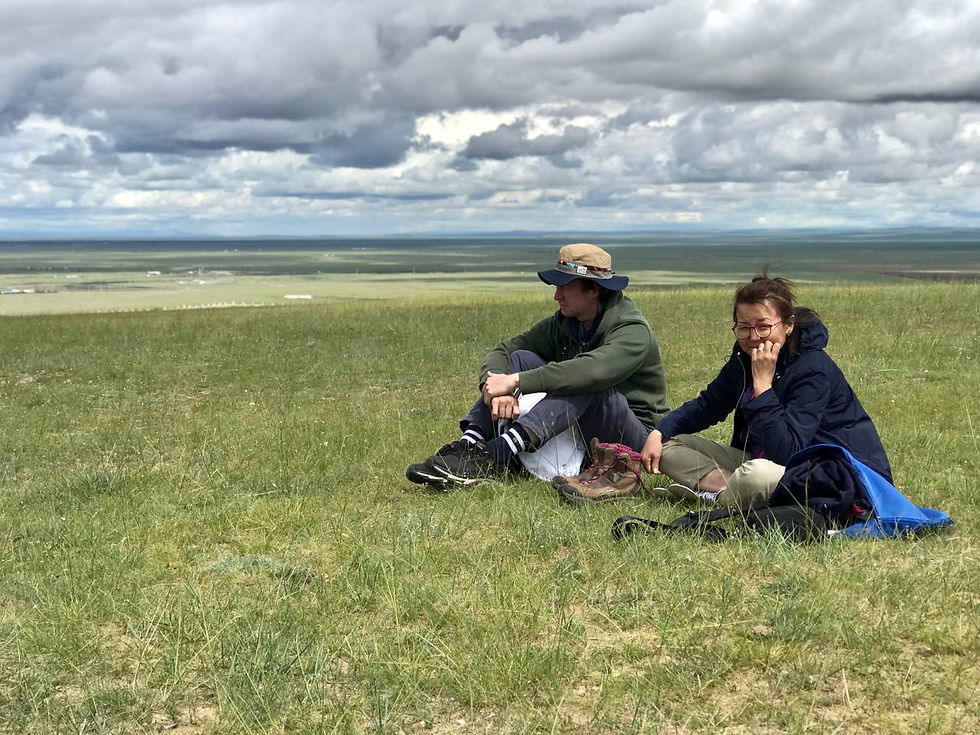
In Russia, ancient cities and museum collections helped us explore the political and spiritual world associated with Alexander Nevsky. In Italy, the Vatican Apostolic Archive offered access to documentary evidence of the diplomatic relationship between the papacy and the Russian prince. Mongolia allowed us to examine the eastern dimension of the story and the wider world of the Mongol Empire. Other locations helped us explore the cultural and historical connections that extended beyond the borders of any single state.
These destinations presented very different practical challenges: international travel, filming permissions, coordination with local institutions, limited opportunities to work in particular locations, and the need to make the most of our time with a travelling crew. Historical research also required us to be precise about what each location and object could actually tell us.
There was another challenge that was less obvious but equally important. Because the film was created in Russian Sign Language, we had to consider the visual composition of every scene. The language itself had to remain central to the storytelling, while the audience also needed to engage with the locations, historical objects, and narrative. We could not simply use conventional documentary techniques and assume that they would work equally well.
The film therefore demanded a constant balance between historical accuracy, cinematic expression, and the practical requirements of communication.
Looking back, I think the locations became much more than a backdrop. They helped us understand the scale of the historical world we were exploring. They also reminded us that the past survives in different forms—in manuscripts, buildings, landscapes, museum collections, and the memories that societies preserve.

We believe that the story, beyond the entertainment, contains a profound message. We could say that its structure resonates with the conflicts many people face today regarding society, changes and the search for an authentic version of oneself. What can you tell us about it, the characters and how has your team's synergy influenced the project's outcome?
I believe one of the reasons historical stories continue to matter is that they allow us to examine human choices from a different distance. The circumstances may be unfamiliar, but the questions remain recognizable: how do we respond to uncertainty, how do we relate to people whose beliefs differ from our own, and how do we balance personal convictions with political responsibilities?
We approached Alexander Nevsky not simply as a monument from the past, but as a historical figure whose life unfolded within a complicated network of relationships. His world involved military threats, political negotiations, religious commitments, and encounters between different cultures. Understanding that context requires more than a simple division between heroes and enemies.
The film also follows our deaf presenters as they guide viewers through the research. Their presence changes the relationship between the audience and the historical material. They are not merely there to explain the past; they are active participants in the process of discovery. The film crew itself becomes part of that journey, reminding us that every historical account involves people who search for evidence, make choices, and construct a narrative.
I would be cautious about assigning a single modern political message to a story set in the thirteenth century. History is too complex to serve as a straightforward illustration of present-day arguments. But I do believe the film invites viewers to reflect on the consequences of decisions, the complexity of identity, and the connections that exist between cultures even when political circumstances divide them.
The team's collaboration was essential to expressing these ideas. Anna Turchaninova's directorial vision helped turn the research and the original concept into a distinctive cinematic structure. The cinematographers, editor, sound team, presenters, and other colleagues each contributed something that no single person could have produced alone.
For me, creative synergy is not simply a matter of everyone working toward the same goal. It is about bringing different kinds of knowledge, experience, and imagination together until the project becomes richer than the original idea. The film's identity emerged through that process of collaboration.

If you had to name three key concepts to help everyone understand your work, what would they be?
I would choose journey, dialogue and accessibility.
Journey is the film's narrative and visual principle. We travel through countries, cities, museums, and archives, following the traces of a medieval world. But the journey is also intellectual: we move from familiar assumptions toward a more complex understanding of historical events and relationships.
Dialogue refers both to the historical subject and to the way the film is made. The world of Alexander Nevsky was shaped by encounters between political powers, religious traditions, and cultures. Our own film also depends on dialogue between researchers, filmmakers, presenters, and audiences. By showing parts of the filmmaking process, we invite viewers to participate in the search for meaning rather than simply receive a finished interpretation.
Accessibility describes the film's creative foundation. We chose Russian Sign Language as the primary language of storytelling, with subtitles and voice performances that allow people with different hearing abilities to experience the same work. This is not only a technical decision. It challenges the assumption that cinema must begin with spoken language and that accessibility should be added only after the artistic work is complete.
These three concepts are connected. A journey brings us into contact with unfamiliar worlds; dialogue helps us understand them; and accessibility allows more people to take part in that experience.
I hope the film shows that inclusive cinema does not have to be confined to a specialized category. It can be ambitious historical filmmaking, with its own visual language and a story that speaks to audiences regardless of their familiarity with Sign Language.

Fellini once said that "all art is autobiographical." What was the most valuable thing you learned making this film? And what would you recommend to those who are taking their first steps in the cinema industry?
I find this idea particularly meaningful when I think about the experience of making In the Footsteps of Alexander Nevsky. David Fincher expressed a related thought in his interview with The Believer, observing that filmmaking involves creating the conditions in which the best ideas can emerge.
That resonates with my own experience. The most valuable lesson I learned was that a film is never simply the execution of an original plan. It develops through the interaction of different talents, perspectives, and unexpected discoveries. The way a film is made shapes not only its visual language but also the meaning that ultimately reaches the audience.
We began with a historical subject, but the production itself became an exploration of how knowledge is created, how people communicate, and how a team can find a new form for a familiar genre. Our decisions about Sign Language, the visible presence of the crew, and the structure of the journey were not separate from the film's meaning. They became part of it.
In that sense, Fellini's observation makes me think about the personal choices behind every creative project. A filmmaker may begin by telling a story about someone else, but the questions they ask, the details they select, and the perspective they adopt also reveal something about their own values.
My advice to people entering cinema would be to begin with a subject that genuinely matters to them. Technical skills are essential, but curiosity and a clear reason for making the film are equally important. You do not need to know everything before you begin. At the same time, my own humanities and historical education gave me a solid foundation for contributing as the film's historical consultant. It helped me approach the subject critically, work with historical sources, and understand the importance of distinguishing evidence from interpretation.
You need to be willing to learn, listen, and work with people whose expertise differs from your own. A strong background in one field can be a real advantage, especially when you are prepared to combine it with the skills of experienced professionals in other areas.
I would also encourage emerging filmmakers not to imitate established formulas automatically. Study the work of others, understand why certain methods are effective, and then ask whether your own story requires a different approach. Sometimes a limitation can become the starting point for a creative solution.
Finally, take collaboration seriously. A film is a collective achievement, and the ability to recognize other people's contributions is one of the most important skills a producer can develop.

What are your expectations for this film? Share your thoughts on the production, the competition area, their reach, and how you achieved them!
When we began making In the Footsteps of Alexander Nevsky, our ambition was to create a feature-length historical documentary that could stand on its own as cinema while opening up a new space for films made in Sign Language.
I am proud that the film has reached audiences beyond the community for which it might initially have been expected to be intended. It has travelled through international festivals, received recognition for its screenplay and other aspects of its filmmaking, and found opportunities to reach viewers through different distribution channels.
The film's recognition at Madrid Film Awards is particularly meaningful to us because the screenplay is central to the way the project brings together historical research, travel, and a distinctive visual structure. We see festival participation not simply as a competition for awards, but as an opportunity for a film to enter a conversation with filmmakers, critics, and audiences from different backgrounds.
Of course, every filmmaker hopes that a film will find a wide audience. But I would define success more broadly than numbers or prizes. I hope viewers who know little about Sign Language will discover that it can be a compelling language of cinema. I hope history enthusiasts will find new connections in the story, and that audiences will recognize how much a different storytelling perspective can contribute to a familiar subject.
The production itself was made possible through persistence, careful planning, and the commitment of a team willing to take creative risks. We also benefited from the support that enabled us to undertake an ambitious international documentary project.
My expectation is that the film will continue to find viewers who are interested in history, cultural encounters, and innovative documentary storytelling. If it encourages other filmmakers to reconsider how they approach language and accessibility, that would be another important achievement.
Ultimately, I hope the film's reach will be measured not only by how many people watch it, but also by the conversations it makes possible.

As a bonus for our readers and viewers, can you tell us something about your upcoming films?
We are continuing to explore the meeting point between history, storytelling, and inclusive cinema. One of our important new projects is a feature-length fiction film inspired by the epic storytelling traditions of Turkic nomadic peoples. The project grows out of our interest in the medieval history of the Eurasian steppe, but it approaches the subject through a different cultural lens: the ways in which stories, legends, and historical memory have been preserved and transmitted across generations.
This direction is exciting to me because epic traditions occupy a space between history, literature, performance, and collective memory. They allow us to explore not only what people remember about the past, but also how communities give meaning to that past.
We are also interested in developing historical fantasy for the screen. This gives us an opportunity to work with medieval material in a more imaginative form while continuing to explore the cultural worlds that have inspired our documentary projects.
Across these different works, our intention remains consistent: to create films with their own artistic identity and to make accessibility part of the creative process from the beginning.
I do not think inclusive filmmaking should be limited to one genre or one type of story. It can encompass historical documentaries, epic narratives, fiction, and experimental approaches to cinema. For me, the most exciting question is always what new possibilities emerge when we bring together a compelling story, a distinctive cinematic language, and people whose creative potential has not always been fully recognized by the industry.
Know more about his amazing works!
--
Thank you for giving us the opportunity to speak with you!
We will be attentive to your next jobs!
MADFA® I Press Team
Madrid Film Awards®


Comments