top of page
MADFA 74.jpg

EVENT 2026

The event took place in the Colegio Mayor Argentino and the Press Palace in Gran Via (Madrid, Spain).

Dates: May 26th to 30th

Search

I am a former principal ballerina, trained by George Balanchine ‘s School of American Ballet. At the age of twelve, my gym teacher saw a dancer in me and invited me into their after school ballet program. When I saw Erika twirl, I knew this was for me. I asked her where she learned to twirl and she told me School of American Ballet. Within two weeks I was auditioning for the school and got accepted. Little did I know that this was the best school in the world and part of George Balanchine’s New York City Ballet.


At the age of nineteen i began performing throughout the world with legendaries such as Rudolf, Nureyev and Mikhail Baryshnikov. And continuing for fifteen years, but the life of a ballerina is short.

Because I always dreamed of being in film I began to study the Meisner Technique. But I started late at the age of 65 after two years I graduated and secured an agent. Feeling like I was on my way to making my dream come true only to be sent on commercials for grandmothers. I would go to these commercials with my tight jeans, my pixie short hair and high heel boots. Sitting in the waiting room with other grandmas who definitely looked the role but not me. I became frustrated and realized the only way to make my dream come true was to produce my own show and film it. That is when I decided to produce, Ballerina.A One Woman Play.

As a former ballerina, in a Ballet company, everything is done for you, Costume staging, lighting, music, etc.

So now I needed to make it all happen. I was lucky to have a great network of friends to help me. Jennifer Vansijll, and I spent hours writing the script, with my dear friend Serrin Anderson on the phone almost every night helping me edit the script, making it my own. Lisa Forte, the owner of The Dance Theater Shop in Mountainview helped me choose my costumes and even donated them to me. Mark Madeo my Acting coach helped me with my acting scenes. Azita Gandjei and Kedar Lawrence helped create my film background. Please watch the film to the end credits to see my amazing team who made this dream come true.

I decided the play would have a simple set of a mirror ballet barre, and a screen in the background to show film or caricatures that I drew. I got the rights to the music I needed and spread the word out to local newspapers and social media. Opening night I humbly bowed to a sold out and standing ovation, with such gratitude. Because of my TV show connection I was able to hire Vidor Sood film and edit the play which later won 11 film festival awards. Because of the success of the film, I decided to write my own memoir in hopes of one day it becoming a TV series. where I could help produce it and maybe even act a role in it.


Ballerina A One Women Play

_________________________________________________________________________________________

  • Could you tell us about your first steps as a ballerina? You have had very demanding training with internationally recognized teachers, how has that influenced your life?

When I was in junior high school, I was approached by my gym teacher who asked me if I wanted to join her afterschool ballet group. I told her I had never taken ballet and she said that didn’t matter. When I walked in to the gym and saw this beautiful girl twirling on one foot, I had to know where she learned to do that. She told me The School of American Ballet. Two weeks later, I auditioned for the school and was accepted. Going to the School of American Ballet with international teachers was wonderful. Each teacher had a different approach to teaching so I learned a well-rounded style and strength. 


  • Tell us about the idea and process of your TV Show, how the idea came about, and what you think about it after the results obtained over these years?


I noticed in life that people always asked me for advice. Where did you get your haircut? Can you recommend a good restaurant? What hotel should I stay at? Where’d you get those pretty shoes and that lovely dress. 


So for The Stephanie Herman Show, I decided to give people what they wanted. I focused on living life by loving it. I really love people so I interviewed fascinating people and filmed beautiful places.  


  • How has your team's synergy influenced among all your projects?


I love working with people. Whenever I performed, I enjoyed everyone involved from wardrobe to the stage crew and management, the conductor, my peers.  I was very lucky to be involved in a small Ballet company of 40 international dancers and we were like a family. I always strive for community wherever I go or work.


  • In order to undertand the value of your pieces, we would like to know more about the mind behind the process. How would you define your personal experience as a ballerina and the relation with cinema?


Ballerinas are trained to push, give 250%, be disciplined, understand the process of rehearsal to performance, and then letting go once on stage. As a ballerina, everything was done for me – my only job was to show up and dance. Producing a film was quite an eye opener.


  • Could you tell us an experience or moment that change or challenge you?


Yes. There was this one exercise in acting class. I had to get up on a box in front of my peers and accept compliments. Some were easy, but others were not. My peers badgered me to accept compliments deep within my soul. When one compliment was, “ you are talented” I couldn’t accept it and tears  rolled down my cheeks


But I did finally accept that I am talented - I walked away that day wondering why a former principal ballerina could not accept her talent - I realized that ballet required me to always strive to be better, no matter what.  So I made a vow to accept my talent - it was that attitude that helped me have the courage to produce my award-winning film, “Ballerina, A One Woman Play”


  • Can you tell us any difficulties you during your career?


Being insecure, tall, and having a lack of confidence.

1- Insecurity caused me to be nervous whenever being judged, like during auditions.

As a ballerina you need to be in control, yet let go at the same time- being nervous and insecure made it difficult


2- Being tall was difficult because company members in a ballet company, start out in the corps de ballet, where everyone needs to be the same height.  I was always at least a few inches taller than all the other females.  And as a principal ballerina, I had to have male partners that were taller than me when I was on pointe.  


3- Confidence, If you don’t believe in yourself, nobody else will. Confidence finally came with maturity and hardships.


  • We'd like to learn more about the how and why you of your vision. If you had to name three key concepts to help everyone understand your work, what would they be?


I am a true believer in owning the magic.

Have the vision of what you want and build it.  Trust the negatives, pushing forward with tenacity, and be creative when things don’t work. I sold my vision of producing my One Woman Play and film before I even had a script. I signed the contract only three months before the performance date - the rest was major hard work.


  • What was the most valuable thing you learned in your career? And what would you recommend to those who are taking their first steps?


As ballerinas, we needed to learn the choreography for every new show. That was not easy, I would fall and feel discouraged that I’d never make it. But with rehearsals and lots of practice, I learned the process of falling before flying. I use that motto whenever starting anything new that I’m insecure about.

  • Your career has collect many recognitions around the globe! Could you tell us more about your perspective on this? What's it like creating such high-quality, competitive projects, and how do you maintain that level of success over time?


Build it and they will come; I get bored if I am not working towards a goal. Maybe that’s the ballerina in me, always striving to make my dreams come true. After achieving a goal, I creatively work towards my next goal. It’s nice to humbly bow, appreciating the recognition. My next goal is to publish my memoir, get an agent, then have it produced into a TV series.


_____________________________________________________________________________


Know more about his amazing works!


  • The Stephanie Herman Show

https://www.youtube.com/user/sherman1dancer * Stephanie’s Vimeo channel:


  • Interview, meet Stephanie


Follow her!


--

Thank you for giving us the opportunity to speak with you!

We will be attentive to your next jobs! 


MADFA® I Press Team

Madrid Film Awards®


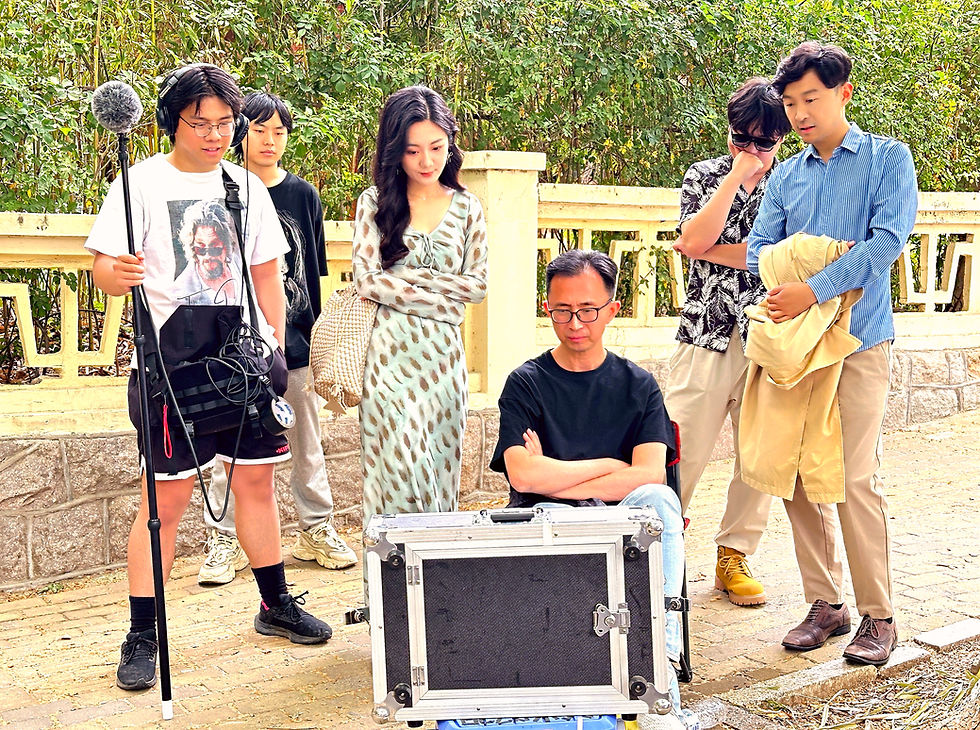
Haifeng Niu (Kevin), an independent film director from Mainland China.

As a little-known director, I persist in creating my own low-budget films while taking on multiple roles such as: director, screenwriter, producer, supervisor, planner, art designer, location scout, editor, voice actor, composer, costume designer, prop master, investor, etc.

"I aim to present my reflections, emotions, sensations, perceptions, and insights on my life through the medium of film, which I deeply love, and to share them and make full communication with all film and visual arts enthusiasts around the world."


Film synopsis: Jiang Haijun, a Chinese filmmaker who went to Europe to study after high school and settled in Germany for 20 years without ever making a name for himself, has achieved little success with his own films while grappling with the clash and fusion of Eastern and Western cultures. At the same time, as a film instructor, his own student won a major award at a renowned European film festival, leaving him feeling deeply embarrassed. To avoid the potential humiliation of facing his students, Jiang hastily decides on a whim to return to his homeland for a week after 20 years away. He hopes to reconnect with old high school classmates and friends, reliving the youthful camaraderie of the past, while seeking to restore his self-esteem and salvage his pride in his hometown. However, he finds that his homeland has transformed dramatically, his city has changed beyond recognition, and most of his former classmates do not take him—this “director from Europe”—seriously.

He also hopes to reunite with the girl he secretly admired in high school, but his wishful thinking leads only to a series of unexpected mishaps and nerve-wracking misunderstandings. In the end, Jiang comes to realize that perhaps the best way to cherish his first love is to keep her hidden in the purest corner of his heart, never to disturb her again. Returning to Europe, he may no longer feel embarrassed by his student’s success. But if he lets go of all lingering attachments, can he peacefully reintegrate into Western culture? Or does he still harbor an unyielding, deep-rooted connection to his homeland?


_________________________________________________________________________________________

  • In order to undertand the value of your piece, we would like to know more about the mind behind the process. How would you define your personal experience with cinema as a director? Could you tell us an experience or moment that change or challenge you?


Well, as we talked about the connection between a director’s personal life experience and his cinematic work, actually I believe it can be understood as a deep projection of life experiences. A director’s personal history, ideological views, and artistic sensibilities form the bedrock of his film style—especially in independent film. The different eras, social classes, nationalities, and cultural environments we inhabit all profoundly influence the themes and aesthetics of our works.


For example, Ang Lee’s early “Father Trilogy” projects his own repressed emotions and

memories, serving as direct creative inspiration. Turkish director Şeyhmus Altun directly

incorporates his childhood experience of forced displacement into his films. Independent film, in particular, usually means fewer commercial constraints and greater creative freedom, allowing the director’s personal imprint to be translated more directly into the flesh and blood of the work. For instance, Wayne Wang’s early films focus on the struggles of Chinese immigrants, a world he knew intimately.

In sum, I think a film director’s personal experience is the “source code” of his creation—especially in independent film. The director internalizes life experiences and then externalizes them through the art of light and shadow, elevating the work beyond

mere entertainment into a unique expression that carries a strong personal signature and can forge a deep spiritual connection with the audience.

As for my own experience, it’s sure that the creative origins of this film are, to some

extent, tied to my own life experience. For example, the sole protagonist shares with me

the fact that we are both film directors in reality. In other words, I placed some of my own personal reflections, perceptions, and feelings onto a character who is also a director, in order to express and present them. Why not choose another profession? Perhaps because I already have some independent thoughts and understanding of the role of a director; other professions might not offer me such direct experience or insight.


Furthermore, the film was shot in my hometown—a city that was once a German colony

over a hundred years ago. Even today, the old town retains many cultural relics from that colonial era, such as German‑ and European‑style architecture, streets, and even the city‑wide underground drainage system built by the Germans over a century ago and still in use. There is also the first beer company in China, founded by Germans, which remains one of the country’s largest breweries. What we need to consider is that the people of this city do not harbor much resentment toward that colonial history, nor toward Germany or Germans.


Such a non‑habitual cultural background and imprint have been embedded in the minds and thinking patterns of my generation and several generations before us since childhood. So when, years later, I wanted to create a film related to my hometown’s culture, all these decades‑old thoughts and feelings burst forth and struck me all at once, becoming a very unique source of inspiration and a driving force for creative challenge in my film.


However, beyond this, the main content of the film and the protagonist’s experiences are not directly related to my own personal life. Of course, his experiences, circumstances, state of mind, and confusion do share some slight similarities with the experiences of friends I have known over the years—for instance, many of my schoolmates who went abroad to study, whose stories have given me some creative inspiration.


  • Your film has a solid and ingenious story, combining suspense, action, love, and very distinct characters. How did the idea come about?

Yes,as you know, for years I have wanted to make a film about my hometown. As I

mentioned before, my hometown has a unique history and a culture of fusion. So many

imprints of modern history have been deeply etched into my growth from childhood to

adulthood. Today, as China continues to develop, my hometown has also undergone

great changes. If we still look at today’s urban and humanistic transformations through the lens of the past, then, to quote a line from the film, “it may indeed take some time to

readjust.” People who have lived here all along may not feel a sudden strangeness, but

from the perspective of someone who left home many years ago and happens to return

from overseas, one can more keenly feel the passage of time and the shift of civilization—along with a certain dimension of loss. This strangeness and loss manifest in all aspects of a person’s character, experiences, and even the persistence of love, and

collectively fermented into the creative inspiration for this work.


  • Could you tell us about any difficulties you encountered during filming? And what was the editing process like, and how was the soundtrack created?


Because it´s clear that it was crafted with great care. Ah, I’m actually afraid to answer such a question, because it brings back all the difficulties we encountered during the creative process. As you know, as an independent filmmaker, I have always insisted on making low‑budget films on my own, and, yes, I’m forced to wear many hats. I am not only the director, writer, and producer, but also the supervisor, planner, production designer, location scout, editor, dubbing artist, composer, costume designer, prop master, investor—and sometimes I even have to temporarily double as a grip or driver for the crew. At such times, you realise that no matter how well you think you’ve prepared before the shoot, you will always encounter all kinds of unexpected problems on set: set construction, art direction, props, actors sometimes unable to get into character, last‑minute changes of locations, as well as sudden issues with liaison, transportation, accommodation—you simply cannot foresee everything.


So, as you know that, this film was shot in my hometown, a very beautiful seaside city

with a European artistic atmosphere. One of the characteristics of a seaside city is fog—that kind of sea fog that fills the entire visual field. I had worried about rain affecting our outdoor scenes shooting, but instead of rain, we encountered three days of heavy fog, making shooting completely impossible. This affected our pre‑arranged locations, hotels, transportation, and actor schedules. Such situations always happen. You might ask how I solved them in the end. I can only say: there is no other way but patience. Of course, I had to be patient—because I would never give up.


As for the editing process, in my previous work I tried hiring a professional editor, but I found that I ended up spending a lot of time explaining every detail of my thoughts and the visual effect I wanted, and I couldn’t be sure the editor would fully grasp my vision.

I also had to stay by the editing console the whole time. So this time I didn’t hesitate and

decided to handle the entire post‑production process by myself, including editing.

Naturally, this came with its own set of problems and troubles, especially in sound editing. For example, when you place the dialogue recorded by the boom microphone onto the timeline, you often painfully hear all kinds of ambient noise and background sounds mixed in with the dialogue voices. You have to patiently re‑process those audio clips bit by bit, and sometimes even ask the actors to come back for ADR to match the final locked picture. Sound processing indeed consumed a great deal of my time and energy.

Regarding the film soundtrack, most of it consists of music I selected myself, which I felt best suited the film’s atmosphere—I listened to hundreds of tracks. In addition, I specially invited a professional composer based in the U.S., a graduate of UCLA, to create an original piece of music for this film. After learning about the film’s theme, she was very enthusiastic and offered to compose an original score for free. I gave her specific requirements for the music’s mood, theme, and atmosphere, hoping that the main melody would be played by the cello, accompanied by piano, violin, harp, etc. After nearly two months of frequent discussions and revisions, I was very satisfied with her final version, and we placed that original composition as the Ending Theme. I would like to take this opportunity to express my gratitude to the composer.

Yes you noticed that many details in the film were carefully crafted—thank you. In any

case, every effort yields a reward; there is no shortcut.


  • We believe that the story, beyond the entertainment, contains a profound message. We could say that its structure resonates with the conflicts many people face today regarding society, changes and the search for an authentic version of oneself. What can you tell us about it, the characters and how has your team´s synergy influenced the project´s outcome?


The protagonist of this film is a Chinese director who went to Europe to study after high

school and settled in Germany for 20 years, yet never made a name for himself.

Horizontally, he has long been facing the clash and forced fusion of Eastern and Western cultures—as he confesses to his old classmates, “I’ve never really been able to get used

to Western food; our Chinese food is still the best.” Vertically, along the timeline, he

confronts the immense changes that two decades of social transformation have brought

to his motherland and his hometown. The strangeness he feels upon his accidental return and the challenge of reintegrating instantly plunge him into even greater confusion—he does not know how to reconcile or merge the two geographic differences and two temporal gaps he inhabits. The protagonist, who has been searching for himself and hoping to prove his own worth, sinks deeper into anxiety, bewilderment, and loss. His habitual mindset and principles, when confronted with the forced integration along both axes, inevitably cause a series of mishaps and nerve‑wracking misunderstandings—thus generating a chain of dramatic conflicts. This is the basic structure of the work. As you pointed out, this may well be the kind of structural conflict that many people today face in society, amidst change, and in their search for an authentic self.

Ah, as for teamwork—I have only one word: fantastic. I am truly grateful to my team for

their dedication, synergy, and efficiency throughout the entire project. They were the most important factor in bringing this work to completion. I hope we can have the opportunity to collaborate again in the future.


  • If you had to name three key concepts to help everyone understand and enjoy more this film, what would they be? And what was the most valuable thing you learned making this movie?


Confusion and loss, mishaps and misunderstandings, self‑reconciliation.

I won’t elaborate on why these three terms, to avoid spoilers. But I think they are key

handles for understanding the film—they relate to the painful process of the collision and fusion of Eastern and Western cultures, the perplexity and disorientation brought about by historical changes experienced over time, and ultimately the attempted extension of the concept of self‑reconciliation and redemption.


  • Fellini once said that "all art is autobiographical", what was the most valuable thing you learned in your career? And what would you recommend to those who are taking their first steps in the cinema industry?


This question has already been touched upon in the first one. Regarding the famous

quote by the great Italian director Fellini—if we apply it specifically to a film director

creating a film—I understand that it doesn’t necessarily mean the story is directly

autobiographical in terms of the director’s actual events. However, it undoubtedly reflects a projection of the director’s inner world. The way a film is presented and the details it portrays are not always deliberately designed; they can be seen as the director’s subconscious “signature.” Thus, filmmaking, like other artistic creation, is not simply “writing one’s heart with one’s hand”—that would be just a diary. When an artist digs into his “private psychic world” with extreme honesty, he actually touches the “collective unconscious” of humanity, because the deepest commonality among human beings lies precisely in the most unique individual experiences.


Specifically, from my own years of making independent or auteur films, I cannot claim to

have any particularly valuable experience to share—everyone’s journey is different. But if there is one most valuable thing I have learned, it is honest thinking and sincere

expression. Nothing is more important or valuable than that. One’s own experiences,

cognition, and reflections are often not in line with the mainstream—that is normal. What matters is whether you have the courage to persist in your independent thinking and to express it honestly. There is no other way.


As for newcomers to the film industry, I don’t think I have any advice to offer. Every

creator’s work should be uniquely their own; I myself am still in constant reflection and

continuous creation. If there is one thing I would like to say, it is: stay true to yourself. Do

not cater to anyone else. Create works that belong only to you.


  • Did the film meet your expectations? Share your thoughts on the production, the competition area, their reach, and how you achieved them!


I can’t remember who said it, but film is always an art of regret—ha! In fact, I ‘m sure that

any artistic creation probably contains elements of final regret. I don’t think that is the

most important thing. What matters is whether you can do your best to express your true thoughts. I do not set excessively high or unrealistic benchmarks for my own works. So I believe this film essentially presents the original intention I had at the start. Of course, there are inevitably some regrets, due to various objective factors, and my own creative skills still need continuous improvement—I cannot rush that. In any case, I will keep a healthy creative mindset. As for the production process, the challenges encountered and how they were resolved—I have already discussed some of them earlier, so I won’t repeat them here.


  • Can you tell us something about your next job?


Yes, I am already preparing my next independent project. I can’t disclose specific details

for now, but I can say that it will continue to focus on the real‑life conditions of ordinary

people in today’s harsh and rapidly changing social environment. The script is almost

finished. I hope the creative process will be smoother this time than the last—haha!


  • Know more about his amazing works!


password: gvds


--

Thank you for giving us the opportunity to speak with you!

We will be attentive to your next jobs! 


MADFA® I Press Team

Madrid Film Awards®


Petr Chroustovský, DiS., is an independent film director, visual artist, and digital creator based in Hradec Králové,Czechia, Europe, Earth. In his creative work, he combines experimental film, science fiction, music visualization, cyberpunk aesthetics, and contemporary technologies, including generative artificial intelligence. A hallmark of his work is its distinctive visual style, atmospheric imagery, and thematic overlap into the realms of transhumanism, cybernetics, and digital culture. He is the founder of the creative studio d3arts.cz, through which he produces original audiovisual projects, experimental films, music videos, multimedia installations, and games. He has long been developing a distinctive cinematic language at the intersection of sci-fi, visual art, and musical imagination.


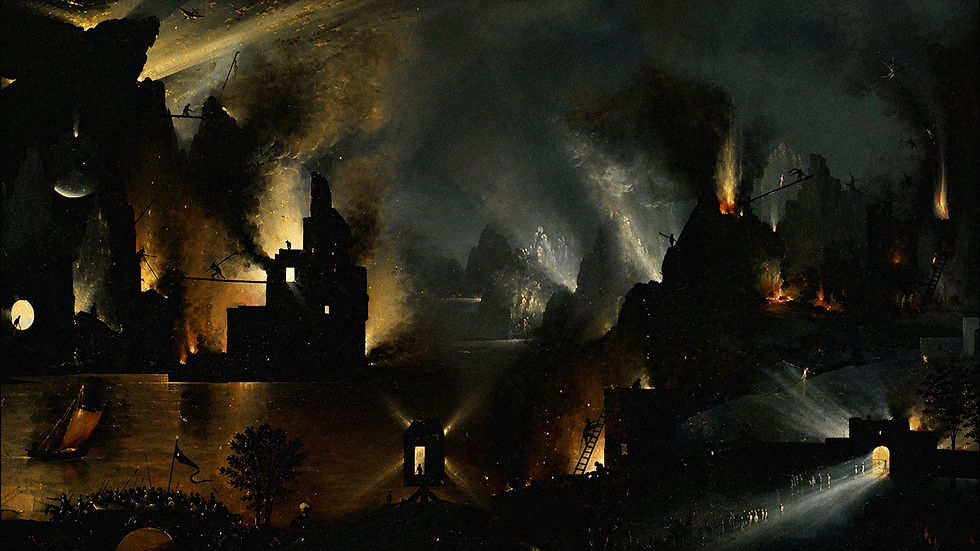
Synopsis: HyperBosch: The Garden Reanimeted is an experimental AI film inspired by Hieronymus Bosch’s iconic painting The Garden of Earthly Delights. Using artificial intelligence, the painting was first digitally cleaned from craquelure and then animated into a living, darkly poetic universe of desire, symbolism, grotesque creatures, paradise, sin, and infernal chaos.

_________________________________________________________________________________________


  • Your experimental film tells a compelling story that combines art, symbolism, poetry and artificial intelligence. How did this original idea come about?

The idea for HyperBosch: The Garden Reanimeted grew out of my long-standing relationship with painting, symbolism and the darker visual images of European culture. The fundamental story is, of course, not mine. I did not invent it. It comes from the biblical and moral symbolism that Hieronymus Bosch, known in Spain as El Bosco, embedded in his famous triptych The Garden of Earthly Delights.

What I tried to do was translate this medieval visual narrative into a contemporary cinematic language. I did not want merely to “animate” Bosch’s work as an attractive visual effect. I wanted to create a filmic reinterpretation that would preserve its essential trajectory: birth, blossoming, temptation, sin, collapse and punishment. This cycle appears repeatedly in my work, for example in my earlier experimental film Oneyear Garden.

Bosch has fascinated me since childhood. When I began painting and studying the old masters, his images affected me differently from anything else. There was brutality, humour, moral precision, grotesque imagination and an almost cinematic use of detail. I carried his visual world in my subconscious for a very long time. I think the way Bosch depicts darkness, sin, corporeality and human weakness corresponds very closely with how I imagine darkness myself. So HyperBosch: The Garden Reanimeted was born from a need to reopen one of the essential works of European culture and give it a new rhythm, new movement and a new audiovisual space. One quiet night I realised that, thanks to contemporary artificial intelligence tools, I could now do something that only a few years ago would have been practically impossible for a single author. I could reanimate Bosch’s garden, enter its details and allow it to speak again through film.


  • What does this work mean to you, and why did you consider it important to realise it in this particular way? Your vision is very personal. What is your connection to painting, and how do you see the role of artificial intelligence in mainstream cinema in the coming years?


For me, HyperBosch: The Garden Reanimeted has personal, visual and moral significance. I am not a religious person in the traditional sense, but I do not see Bosch’s message as merely religious. I see it as a practical statement about human behaviour. It is an image of how easily human beings surrender to desire, pride, power, the body, excess, violence and indifference. In other words, to what tradition calls the seven deadly sins: pride, greed, lust, envy, gluttony, wrath and sloth.

In this sense, Bosch’s triptych remains completely relevant. We can read it religiously,

philosophically, ecologically or psychologically. What is closest to me is its practical dimension: how we behave towards ourselves, towards other people, towards the body, towards desire, towards the planet and towards the gifts that have been entrusted to us. Although I sometimes make fun of the Church, I take this message seriously. In a certain sense, it is an illustrated manual on how not to destroy one’s own life.


My connection to painting is natural. I come from image, drawing, composition, light, layered meaning and detail. For me, cinema is not only plot. It is visual dramaturgy. In the case of HyperBosch: The Garden Reanimeted, I worked with the image as a living landscape through which the camera moves in a similar way to how the viewer’s eye moves across a painting. Artificial intelligence was not a gimmick here, but a cinematic instrument that made it possible to translate painting into a time-based medium.

My view of AI in cinema is rather pragmatic. If a shot can be created faster, cheaper and sometimes even more precisely than through a traditional production process, filmmakers will use it. If one author does not do it, another will. Similar ruptures have happened before: photography changed painting, sound changed silent cinema, television changed theatre and film, and the internet changed distribution and audience attention. I do not think AI will kill classical cinema, just as television did not kill theatre. But it will fundamentally transform it.


Traditional cinema will continue to exist because it is connected to reality, to actors, to their bodies, voices, lives and media aura. AI cinema, however, will open space for authors who would never have access to large-scale production. It will enable new visual genres, new professions and a new cinematic language. Some professions will fade, others will emerge. Some stars will disappear, others will shine.

I also made HyperBosch: The Garden Reanimeted with a very simple motivation: I wanted to see it one day on a real screen, in front of an audience. I wanted to find out whether an experimental AI film rooted in classical painting could truly meet the viewer. That is why its festival presentation in Spain is important to me, as is my next appearance at the Love & Hope International Film Festival Barcelona, where my work will once again meet an international audience.


  • Could you mention some of the difficulties you encountered while creating the film?

There were many difficulties. The source material itself is extremely demanding. Bosch’s The Garden of Earthly Delights contains motifs of nudity, sexuality, violence, bizarre bodily transformations, torture, grotesque brutality and religious symbolism. These are precisely the areas where today’s generative systems often collide with safety restrictions, content filters and interpretive limitations. There was a very thin line. On one side, I needed to preserve Bosch’s rawness, corporeality and moral brutality. On the other, I did not want to fall into self-serving shock, pornography or cheap violence.

For me, it was essential that HyperBosch: The Garden Reanimeted remained art, not a catalogue of forbidden images. How exactly I navigated some of those technical and content-related limits is something I will keep to myself for now. The second essential challenge was working with the painting itself. The film also relies on digital access to the details of Bosch’s garden. The work of Q42 - Micrio, who digitised the painting in high resolution and made it possible to enter its individual layers, scenes and details, played a major role. I was then able to treat those fragments as cinematic material: restoring them, cleaning them, expanding them, reconstructing them and eventually animating them.

Another layer was the use of AI artefacts. In my films, I sometimes leave them in deliberately. Not because I am too lazy to remove them, but because they can create a specific unease. The viewer often subconsciously feels that “something is wrong,” even if they cannot precisely name it. I consider this uncanny effect a legitimate part of contemporary AI film language. In HyperBosch: The Garden Reanimeted, the artefact therefore does not always function as an error, but sometimes as an expressive device. At the same time, I do not try to hide the fact that the film was created using AI. On the contrary. I see it as part of its authenticity. Today everyone is chasing image perfection, but I am interested in the moment when the medium still reveals its technological nature. Perhaps one day AI images will be perfectly smooth. But I am interested in this transitional phase, when a new cinematic language is still being born.


  • We would like to know more about how and why you chose this interesting approach. If you had to name three key concepts that could help everyone understand this film and notice details that may escape the ordinary eye, what would they be?

I would choose three concepts: sin, reanimation and transformation.

The first concept is sin. Not only in a religious sense, but as a fundamental dramatic force. Bosch’s garden is a vast visual encyclopaedia of human weakness. In HyperBosch: The Garden Reanimeted, I try to show that the seven deadly sins are not a dead medieval concept. Pride, greed, lust, envy, gluttony, wrath and sloth are still deeply contemporary. They simply wear different costumes, use different technologies and inhabit different settings today.

The second concept is reanimation. This is not animation in the conventional sense of making a picture move. It is the revival of an existing cultural organism. That is also why the film is called HyperBosch: The Garden Reanimeted. I wanted to create the impression that Bosch’s image was never truly static; it was merely waiting for a medium that would allow it to breathe, move, sound and exist in time.

The third concept is transformation. Everything in the film transforms: bodies, landscape, architecture, meaning and tempo. At first, the film works with softness, birth and almost meditative movement. Gradually, however, the image becomes denser, the rhythm accelerates and the world descends into destruction. This transformation corresponds to the structure of the triptych itself: paradise, temptation, hell.

In terms of detail, it is important to understand that no scene is merely decorative. Every creature, every act, every gesture and every deformation carries meaning. Bosch was a master of visual composition, and I tried to translate that ability into the temporal composition of film.


  • To understand the value of your work, we would like to know more about the mind behind this project. How would you define your personal experience with film as a director? Could you tell us about an experience or moment that marked you, or a challenge you faced?

When I immerse myself in creation, it becomes almost impossible to stop. Filmmaking is a very powerful form of self-realisation for me. At one moment, image, music, editing, sound, technology, script, intuition, improvisation and visual experience all come together. At that point, I feel that I am using everything I have ever learned.

I do not always work with a completely fixed script. Often I start from a visual, musical or symbolic axis, and during the process other ideas emerge. I would describe this as a method of introspection and controlled improvisation. In AI filmmaking, this is very natural, because shots can be generated quickly, but they never turn out exactly as one imagined. Sometimes that is a problem. At other times it is a gift.

This uncertainty is precisely what interests me about AI cinema. Traditional production often requires long planning, budgets, crews and logistics. In AI creation, some phases shrink from months to days or weeks. That does not mean it is easy. It means the creative process is more flexible. The author can respond more quickly to the image that is appearing in front of him. A strange dialogue emerges between the director and the tool.

With HyperBosch: The Garden Reanimeted, until the very end I did not know whether I would truly be able to animate all the key scenes. Some images were technically, conceptually and dramaturgically very difficult. In the end, however, there was not a single essential shot that I failed to bring into motion. That confirmed to me that my method is based precisely on the ability to improvise and find a path even when the medium resists.

This experience is also connected to my broader body of work. Whether it is Oneyear Garden, the music films Secrets of Kandahar – Parallax, Secrets of Kandahar – Cosmic Dance, or new projects such as Taste Channel, I am always interested in how far personal auteur cinema can be pushed without a traditional production apparatus.


  • Could you tell us more about the process of writing the script and how you chose the dynamics of the edit?


In HyperBosch: The Garden Reanimeted, the dynamics are not determined by the script alone. They are determined primarily by the image, the music and the inner dramaturgy of Bosch’s triptych. The film begins more slowly, almost contemplatively. Birth and blossoming need time. The viewer must enter the world, understand its visual logic and accept its rules. Then the dynamics begin to accumulate. The image thickens, bodies multiply, gestures accelerate, meanings are layered and the composition becomes more aggressive. The ending then shifts into sharp, brutal and rhythmically harder sequences of punishment, destruction and musical hell.

I wanted to preserve this symbolism in the sound as well. That is why I built the film on my own music from the project Secrets of Kandahar, specifically on a dark interpretation of the track Glitched Delights. At first, the music works with a more delicate atmosphere, but gradually it fractures into cutting darksynth structures. I wanted it to almost caress the viewer’s soul at the beginning and then tear it apart by the end.

The editing, therefore, is not just a technical ordering of shots. It is a rhythmic and psychological construction. It works with the contrast between tenderness and brutality, purity and decay, beauty and filth, birth and ruin. I believe this contrast lies at the core of Bosch’s world and at the core of HyperBosch: The Garden Reanimeted.


  • What are your expectations for the film? And how are you experiencing the phase of international competitions?

I sincerely hope that HyperBosch: The Garden Reanimeted will speak to the Spanish audience in particular. In Spain, Bosch — or El Bosco — holds a special position. The Garden of Earthly Delights is associated with the Museo del Prado in Madrid, and I feel a certain symbolic power in the fact that my cinematic reinterpretation of this work is reaching Spain.

I do not expect every viewer to read the film in the same way. That would not even be right. But I do hope that the audience will sense both respect for the original and the courage to work with it through a contemporary language. HyperBosch: The Garden Reanimeted is not a museum illustration. It is an auteur cinematic dialogue with a master who, centuries ago, created images so modern that contemporary technology is only now beginning to touch them.

I experience the festival phase very intensely. It is a strange mixture of nervousness, joy and uncertainty. A little like a first date. You never know how the audience will react. Especially with an experimental AI film that works with such a powerful visual source.

Beyond the Madrid presentation, my participation in the Love & Hope International Film Festival Barcelona is also very important to me. Barcelona has already played a significant role in my work thanks to the film Secrets of Kandahar – Parallax, which was also selected for the Love & Hope International Film Festival Barcelona. Returning to the Love & Hope International Film Festival Barcelona therefore feels like confirmation that my auteur AI work is beginning to establish an international continuity.

At the same time, I organise my own festival Playlist International Film Festival Hradec Králové / PiFF HK, which focuses on AI filmmaking. Because of that, I now perceive festivals from both sides: as an author sending a film into the world, and as a curator and organiser thinking about how to present AI cinema to audiences in a meaningful, dignified and dramaturgically precise way.


  • Could you tell us something about your next project?

I feel as if my creativity is on steroids right now. Perhaps I am going through the most productive period of my life. I am currently working on several projects that move between sci-fi, experimental film, music video, grotesque comedy, fairy tale and AI visual art.

One line of work is, of course, the world of Secrets of Kandahar, my AI new-wave synthpop / synthwave band, which is closely connected to my filmmaking. Films such as Secrets of Kandahar – Parallax, Secrets of Kandahar – Cosmic Dance and Secrets of Kandahar – Saucers, Secrets of Kandahar — Dreams (the newest one) are not merely music videos for me. They are chapters of a larger audiovisual universe.

Alongside that, I am developing GUST — Taste Channel, a sci-fi gastro comedy. GUST is part of scifi trilogy with Liturgy of Emergence and Prayer of Hyperfantasy, the latter of which was, in a way, my personal manifesto and a predecessor to HyperBosch. It was also the first project in which I reanimated my own paintings. The newest one project is The Perfect Execution, a scifi tragicomedy too on which I am collaborating with screenwriter David R. Schleicher. Its tone is completely different from HyperBosch: The Garden Reanimeted, but I am still interested in the same things: the absurdity of human beings, technology, the body, taste, civilisation and the future.

I am also trying to complete the animated fairy tale Bubola and the Cosmic Journey, which is close in spirit to The Little Prince. At the same time, I continue working on Playlist International Film Festival Hradec Králové / PiFF HK, because I want to create a space for authors who approach AI filmmaking seriously — not merely as an effect, but as an emerging artistic language.


I have sacrificed and risked a lot because of AI creation. I left my job, invested my own resources, time and energy. It required a great deal of courage. But HyperBosch: The Garden Reanimeted is proof to me that it was worth it. It is a film about sin, but for me personally it is also about overcoming one’s own humanity. Perhaps it is through creation that we become most aware of how sinful, fragile and fascinating we truly are. I would also like to thank my wife, who gives me the time, space and trust I need to fully realise myself through my work. Her support is essential to everything I do. Without her patience, understanding and belief in my creative path, many of these projects

would simply not be possible.


Check out these featured projects!


Know more about his amazing works!


Follow Him!


--

Thank you for giving us the opportunity to speak with you!

We will be attentive to your next jobs! 


MADFA® I Press Team

Madrid Film Awards®

© 2026 powered by MADFA®

  • Facebook icono social
  • Icono social Instagram
bottom of page